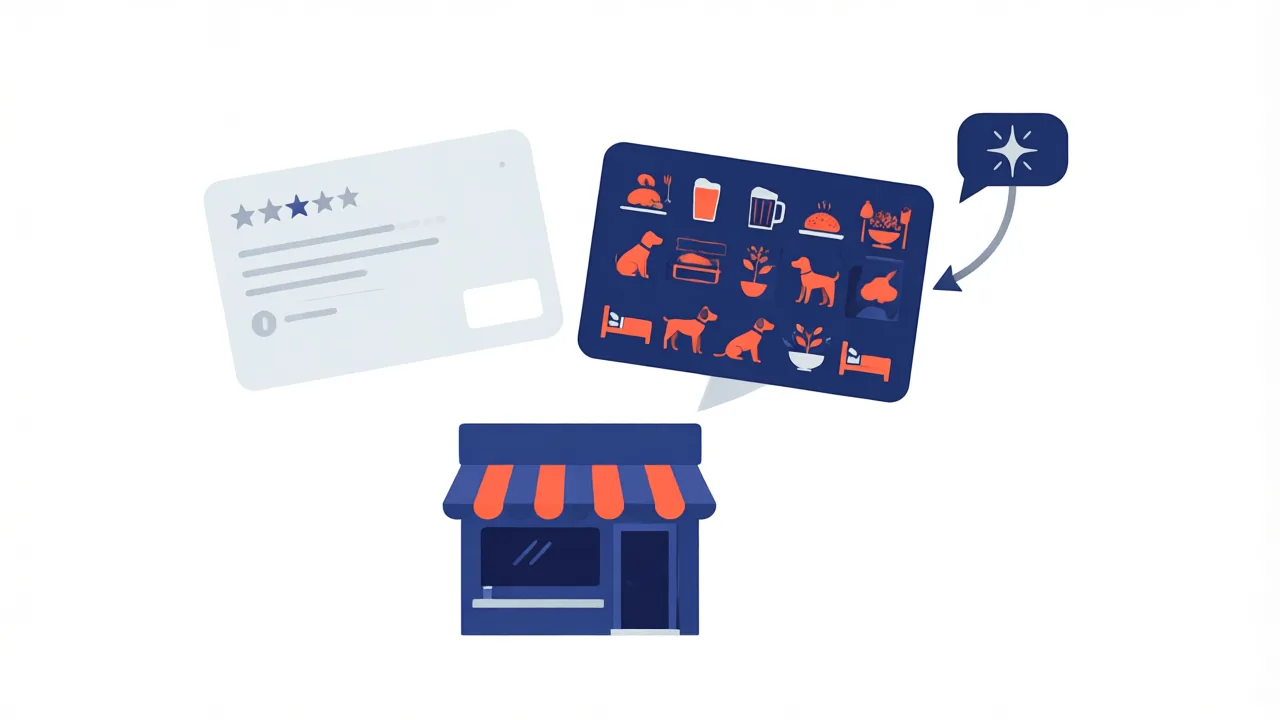
Asking guests to leave a Google review is not enough on its own. It produces a handful of short, generic reviews written cold, and AI search systems have little to work with in “great pub, lovely staff”. What gets a venue recommended is a steady flow of recent reviews that describe specific things: the dish, the garden, the room, the pool, the check-in. Service Monitor Adapt is built to collect useful guest feedback first, then make it easy for the guest to reuse it as a public review.
AI search is changing how people find pubs, restaurants and hotels
Around one in seven UK adults has already used an AI assistant to find a pub or restaurant, according to a June 2026 industry-commissioned survey of 1,000 UK adults, and among 25 to 34 year olds it is a third. The numbers are directional, but that group did not exist three years ago.
Watching that shift happen in real time is one of the more interesting parts of working in customer feedback. Ten years ago you typed “pubs near me” into Google and scrolled. Now you ask a full question, “where can I get a good Sunday roast with a dog-friendly garden near me”, and get a shortlist back.
The AI now sits between you and the guest at the moment of choice, and it decides which venues to mention. We have written a fuller guide to how AI search uses reviews to recommend pubs, restaurants and hotels, covering the definitions, the UK rules on reviews and how to measure any of it. This post is about the one habit most operators need to break.
AI search needs specific Google reviews, not just five stars
A five-star rating gets a venue considered. Specific detail gets it recommended for the right occasion.
Take two reviews with the same rating.
“Great pub. Lovely staff. Would recommend.”
“Roast beef today, generous portion and the veg was spot on. Dog friendly in the big bar area and there’s seating in the garden. Well worth it.”
The first still builds trust with a human reader. It tells a search or AI system nothing about what the pub is for. The second gives a system real things to match on. When someone asks for a dog-friendly pub with a garden and a decent roast, only one of these reviews can help.
Why asking guests to post on Google produces thin reviews
Asking guests to post directly on Google produces extreme, thin reviews the venue cannot learn from, and it pushes operators towards gating.
You get the extremes. People who post unprompted are usually either delighted or furious. Everyone in the middle, most of your guests, stays quiet.
You get thin content. A blank review box leaves the guest to do all the recall work straight after a visit. Across the hospitality estates we work with, far more guests complete a private post-visit survey than leave a public review, and the survey comments are consistently longer and more specific.
The venue learns nothing. A one-star review that says “won’t be back” helps nobody. A public review is marketing data, rarely operational data.
The temptation to gate. Once a business is chasing stars, someone suggests only sending the happy guests to Google. Google prohibits it, the UK’s Digital Markets, Competition and Consumers Act treats manipulated reviews as a consumer protection matter, and the CMA is enforcing it. A wall of identical five-star reviews also looks suspicious to people and models alike.
How an AI guest survey turns guest feedback into better reviews
An AI guest survey is a post-visit survey that adjusts its questions in real time to what each guest says, following up wherever a comment needs exploring. Adapt does this for pubs, restaurants, hotels, holidays and visitor attractions, and for any other business with customers to ask.
It probes vague comments. If a guest says “the food was cold”, Adapt asks which dish. If the service was poor, it asks what happened. It never guesses at causes and never asks twice about something the guest has already covered. “Wasn’t up to much” becomes lukewarm fish, soggy batter and nobody checking on the table, which a manager can act on.
It covers what matters to your operation. We design each survey around your business and customer journey: a pub on its garden, a hotel on rooms and breakfast, a holiday operator on the pool and the entertainment. If the guest has not mentioned one of those topics, Adapt asks about it, and “everything was great” is treated as covering nothing. It also skips anything the guest did not experience, so a quick pint with no food never gets a question about the menu.
It stops when it has enough. Adapt has a clear definition of useful feedback: what was ordered, what happened, when and where in the venue. Once the guest has given that, the survey ends. If not, one short question closes the gap. Guests answer fewer questions than in a fixed survey and give richer feedback.
It gives every guest the same share option. Whatever their score, every guest who completes the survey is offered it. One tap gives the guest a short summary assembled from their own answers, with nothing added, and opens Google, TripAdvisor or Trustpilot. The guest edits it, posts it or ignores it from their own account. Their phrasing and tone are kept. There are no prize draws, discounts or points for posting. Unhappy guests can ask for manager contact, and a score below your threshold triggers an instant alert to the venue, both alongside the share option rather than in place of it.
It keeps every profile fresh. You decide which platform each venue points guests to, Google, TripAdvisor or Trustpilot, and Adapt can rotate that automatically so no profile goes stale. The rules are about recency and coverage, never the guest’s score. Paired with Online Review Monitoring, you can see which profile is going quiet and point the next guests there.
And because it is still a survey, none of the operational data goes away. Scores, NPS, alerts and trend lines stay, and Adapt checks that comments and scores agree, so a mistyped rating does not skew your results. Operations get the why behind every score; marketing gets public evidence that matches real search questions. One guest conversation, two jobs done. The same conversation also produces testimonial candidates that AI classifies by topic and quality, your team approves, and you publish on the relevant venue page as crawlable text.
If you would like to see what Adapt would ask your guests, get in touch and send us one of your existing surveys. We will show you the follow-up questions, the operational output and the review summary side by side.